Part 1: The Trap of Arcane Foundations
JUNE 13TH, 2026

Sometimes the algorithm brings my researcher brain treats that I’ve been exploring for a while now.
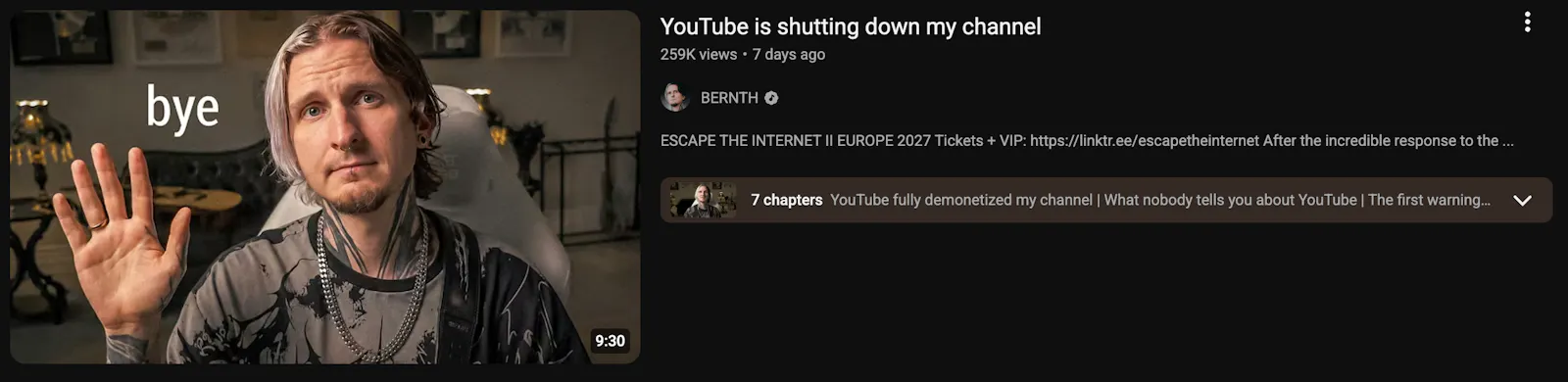
So, this video appeared.
It’s by a prominent guitar content creator named Bernth, titled "YouTube is shutting down my channel." He walks through the frantic, confusing process of trying to recover one of his channel's monetizations. As I watched it, a growing lack of clarity around two things instantly stood out. First, there is a difference between a channel being deleted versus being demonetized. Those are materially different states, but emotionally they might feel identical because both threaten a creator's identity, audience continuity, and survival.
Second, there is a total absence of a clear rubric or transparent, actionable steps from YouTube headquarters to show creators exactly where a breakdown happened. Instead, a creator with over a million subscribers is left navigating a systemic crisis based on a physical verification letter getting lost in the mail.
This video highlights a much deeper question:
What level of transparency is required for a platform-dependent economy to remain psychologically and economically stable?
Right now, we are dealing with a profound operational asymmetry: creators are expected to understand and execute platform rules perfectly, while platforms reserve the right to remain vague, adaptive, and entirely discretionary. This structural imbalance creates chronic anxiety because creators cannot reliably model risk.
Transparency's Corporate Risk Assessment
I understand the corporate incentive for this ambiguity. A platform might intentionally avoid highly specific enforcement criteria because rigid transparency increases legal exposure, advertiser pressures shift constantly, and bad actors would simply optimize around explicit rules. Vagueness functions as a deliberate liability reduction strategy.
But the tradeoff is the systematic erosion of trust. And once creators begin viewing platforms as unstable, volatile landlords instead of collaborative partners, their behavior changes. They stop chasing the highs of the algorithm and begin prioritizing direct audience access and private, sovereign internet behavior.
Now, as for the creator himself, we have to look at the motivations on display for the sanctity of balance. There is a clear reward for using a sensationalist title and drawing an audience to a cause. We all have to find ways to eat in a society hellbent on our capture, so this isn't about speculation - it’s just observing the patterned reality of surviving the attention economy.
In fact, when platforms monetize attention volatility, creators eventually learn that instability itself is economically sound. The social economy actively rewards public vulnerability, crisis signaling, and platform anxiety content because those high-emotion states generate maximum engagement. The system economically amplifies the panic.
Case in point: if you look at the secondary channel itself - the actual channel facing the issue - the crisis video doesn't exist there at all. The channel actively uploads standard, topic-focused instructional content. The panic narrative is entirely quarantined on the main channel where it can generate maximum narrative leverage and tour ticket sales, while the smaller product ecosystem stays clean.
Regardless of the inner workings of his mind, the structural point stands: because platforms choose to operate in total secrecy, the community is left entirely dependent on the creator's filtered, emotionally amplified version of events. Ambiguity doesn't just reduce corporate liability; it manufactures a culture of permanent audience anxiety.
If you want to understand the psychological stability of a platform-dependent economy, you don’t look at corporate press releases, you look at the comments. The feedback loop under this video is a perfect case study in what happens when systemic ambiguity meets an anxious populace. When you scrub away the individual identities and look at the underlying data, the community responses cluster into three distinct, systemic themes:
1. Opacity Breeds Conspiracy (The Wage Theft Narrative)
When a platform reserves the right to remain vague, adaptive, and entirely discretionary, it leaves a data vacuum. And data vacuums can lead to ideas of potential acts of malice. Multiple viewers pointed out a jarring paradox: even though the creator’s channel was flagged as "demonetized," YouTube's system continued to run mid-roll advertisements on the video. Because the platform won’t provide transparent rubrics or clear communication, the audience emotionally collapses a routine administrative glitch (a lost verification letter) into an active act of corporate wage theft. They conclude that the platform is intentionally using ambiguity to escape paying legitimate creators while still pocketing the ad revenue. The platform's lack of transparency manufactures its own villain arc.
2. The Neofeudal Backchannel
When formal, transparent channels fail, people default to informal power networks. One of the most telling, heavily engaged themes in the discussion was the community urging the creator to bypass official support entirely and contact specific third-party industry figures who are known to have "backdoor contacts" at YouTube headquarters. Think about how wild this is for a multi-billion-dollar economy. To resolve a critical business infrastructure issue, a creator shouldn't have to rely on a guy who "knows a guy" inside the corporate castle. This is digital neofeudalism: where access to basic operational support depends entirely on personal proximity to the court.
3. The Boiling Point: Captivity vs. Migration
The most vital trend for what we are building collectively is the palpable desire for structural exit of restrictive creation. The sentiment isn't just sad; it’s looking for the door. Dozens of threads echo variations of the same breaking point: viewers expressing total exhaustion with automated systems that offer zero human contact, users calling for a fast and collective migration to independent alternatives, and creators pointing out the insult of platforms allowing AI-generated "slop" to flourish while penalizing real human communities over administrative anomalies.
This is the exact point where a dependency structure begins to splinter. The social economy runs on perceived stability. Once the landlord feels unstable, capricious, and predatory, the value of an owned ecosystem skyrockets.
And even though I’m currently a user of at least one of these major platforms, I’ve included some of the emerging alternatives in the next parts of this series because you deserve the right to know and evaluate them for yourself, based on your own wants, needs, and goals.


